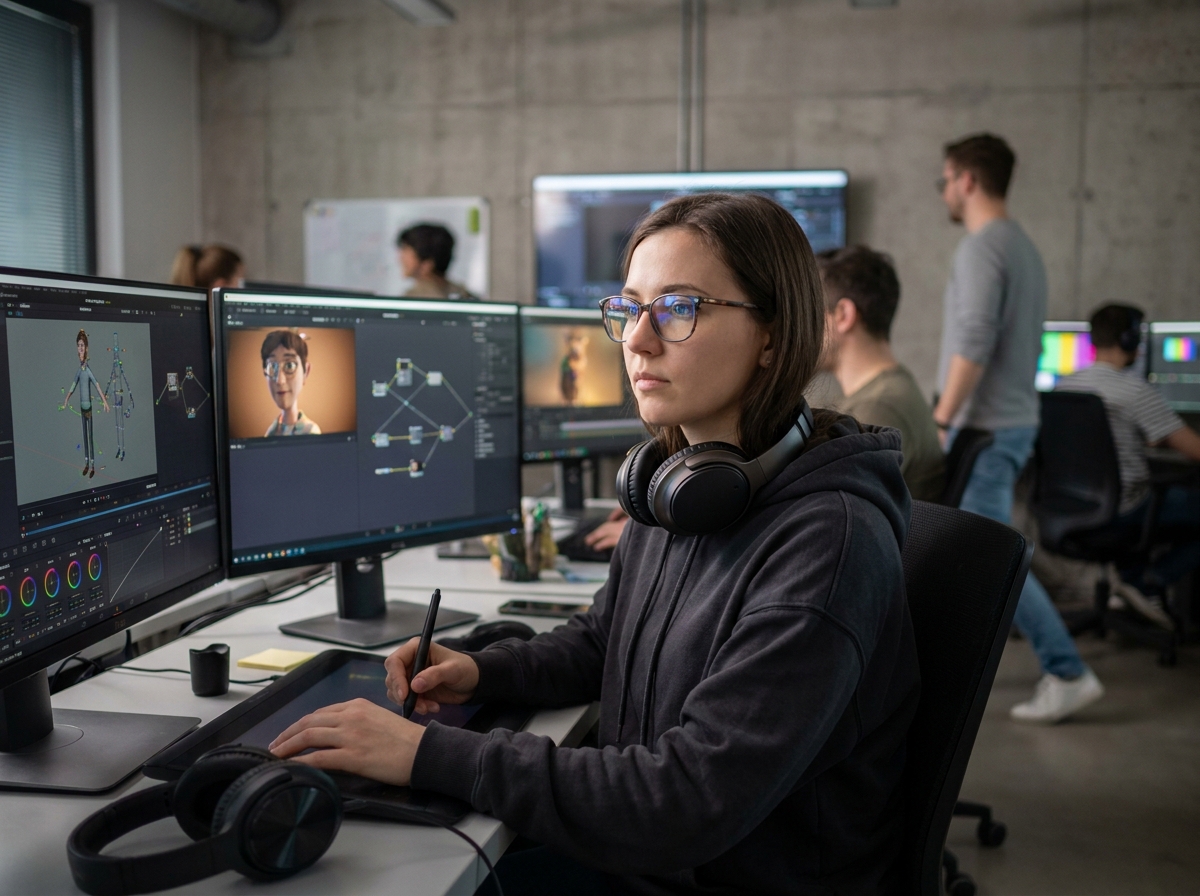
When discussing with second-year students in a 3D animation bachelor’s program, one remark often comes up: the gap between the school’s brochure and the reality of daily life in the educational studio. Some discover compositing halfway through, while others spend weeks on rigging without having touched organic modeling. Understanding what schools actually offer requires looking beyond module titles to see what is happening concretely in student production pipelines.
Production Pipeline in School: How Projects Structure VFX Training
Most specialized schools organize their curriculum around short projects (a few weeks) and a long final project (several months). This division is not trivial. It replicates the pipeline logic of professional studios, where each step (concept art, modeling, texturing, rigging, animation, lighting, compositing, rendering) depends on the previous one.
In practice, a 3D animation bachelor’s student goes through all these steps at least once before the third year. The stated goal is to train profiles capable of understanding the entire chain, even if they specialize later. The final project remains the true test of competence, the one that studio recruiters want to see in interviews.
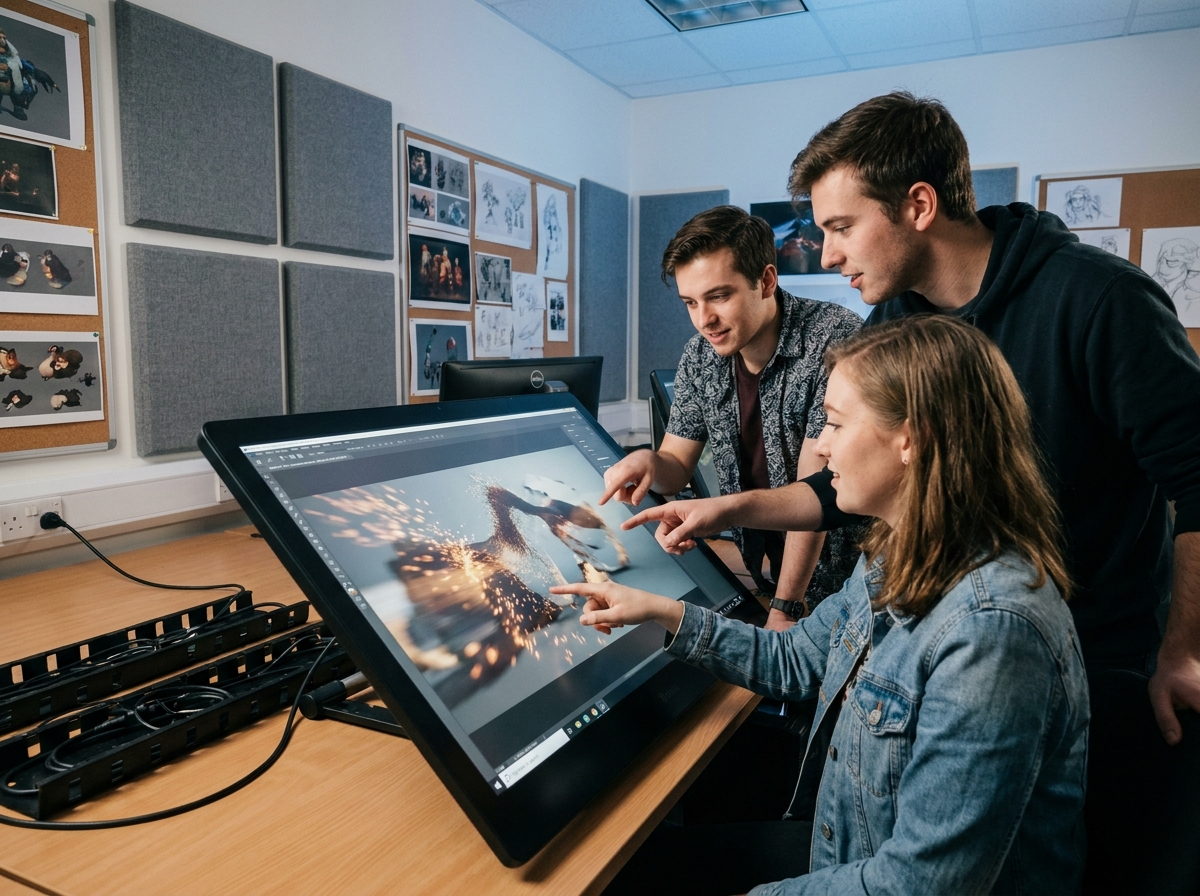
Where feedback varies is on the quality of technical supervision during these projects. To better understand what schools offer in 3D animation and VFX, one must look at who provides the oversight: professional practitioners currently in studios or permanent teachers whose field experience is several years old.
The difference is directly felt in software choices, collaborative work methods, and the relevance of feedback on renders.
Specialization from Bac+3: A Requirement of Animation Studios in France
Recruiters from French VFX and animation studios (Illumination Mac Guff, Mikros, Fortiche) indicate during recent professional conferences that they are increasingly looking for ultra-specialized profiles right out of school. Groom artist, facial rig, lighting TD, FX artist: these jobs cannot be improvised with a generalist veneer.
For schools, this changes the game. Offering a common core for three years is no longer enough. The programs that attract the best students are those that allow for technical specialization starting in the third year, with dedicated modules and projects supervised by professionals in the targeted position.
The Most In-Demand Specializations by Studios
- Character artist and groom artist: character modeling, digital sculpting, creating hair and fur for animated films or video games
- Rigger and TD rigging: building digital skeletons and deformation systems, a technical position that chronically lacks trained candidates
- FX artist: fluid simulation, particles, destruction, a field where mastery of Houdini becomes a prerequisite
- Compositing artist: final assembly of render layers, color correction, integration of VFX elements into live-action shots
It is noted that schools that display a high employment rate are often those that offer these technical specializations with instructors directly from the relevant studios.
Generative AI in 3D Animation Curricula: A Recent Addition, Not a Replacement
Recently, several schools have integrated modules dedicated to generative AI into their programs. Training managers at Gobelins mention AI workshops in the Animation Cinema curriculum starting in 2023, with a focus on ethics and understanding the limitations of these tools.
In practical terms, this includes rapid pre-visualization, assisted concept art, and automated clean-up in rotoscoping. AI serves as an accelerator in the pipeline, not a substitute for technical mastery. French studios like Mac Guff or Unit Image explain that the ability to understand and oversee the use of these tools becomes an advantage in hiring.
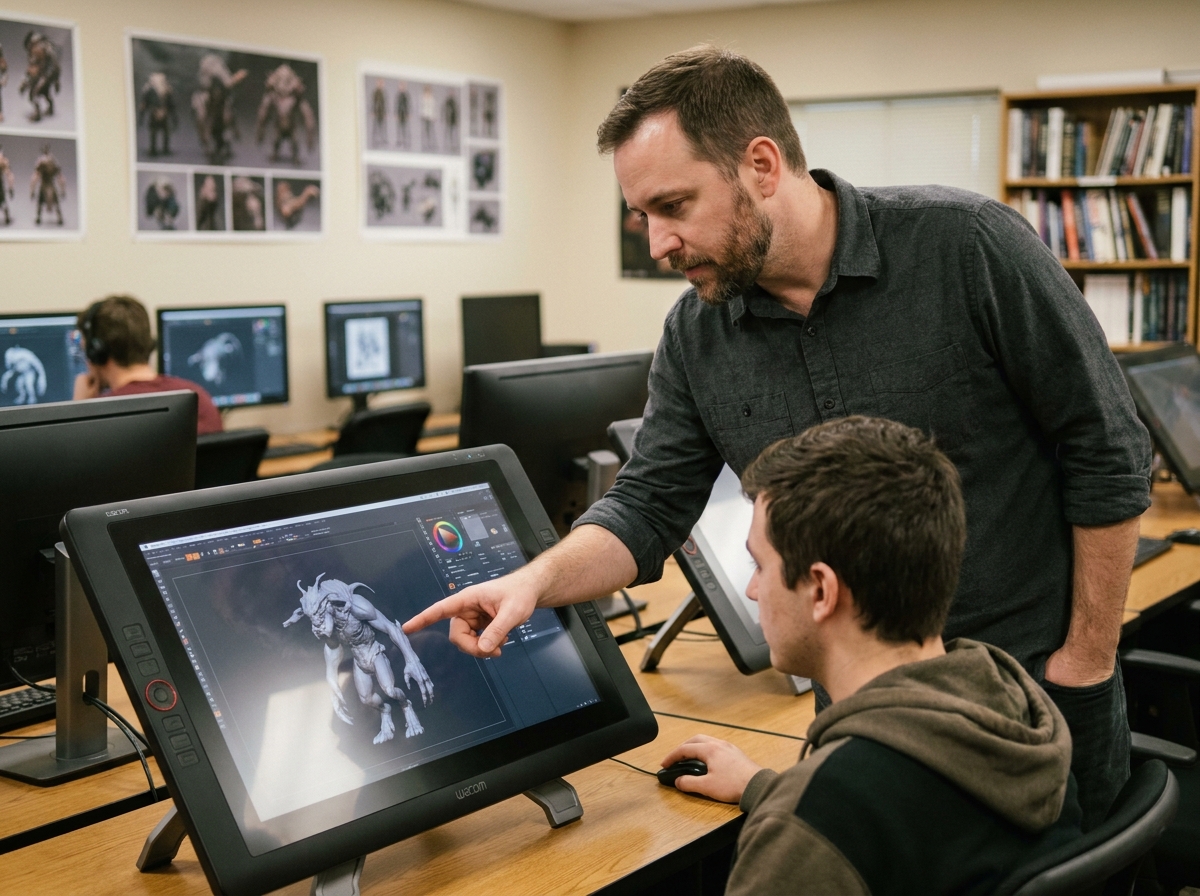
For students, this means one more module in an already dense schedule. The question facing current cohorts is pragmatic: should time be devoted to mastering a generative AI tool at the expense of hours of practice on Maya, ZBrush, or Houdini? Schools that manage this balance well integrate AI as a transversal tool, used throughout projects, rather than as an isolated lecture course.
RNCP Certification and Recognition of VFX Training: A Criterion to Check
It is not always considered when choosing a school, but RNCP certification conditions access to apprenticeships, scholarships, and recognition of the diploma in the job market. Some animation and VFX schools have seen their RNCP titles suspended or not renewed in recent years, forcing them to revise training content, internship structures, and sometimes diploma titles.
Checking RNCP status before enrolling avoids unpleasant surprises upon graduation. An unregistered title does not block access to employment, but complicates administrative procedures and may pose problems for pursuing a master’s degree.
Concrete Points to Check Before Committing
- The RNCP file number and its validity date, which can be checked on the France Compétences website
- The list of taught software and their versions (a curriculum still training on outdated versions is a warning sign)
- The ratio of active professional instructors to permanent teachers
- The existence of formal partnerships with studios for final internships
The cost of a bachelor’s degree in 3D animation represents a significant investment over three years. Cross-referencing these criteria with the employment rate published by the school remains the most reliable method for an informed choice.
The final showreel matters more than the school’s name on a CV, but it is essential that the training provides the technical means to produce work that meets studio expectations.