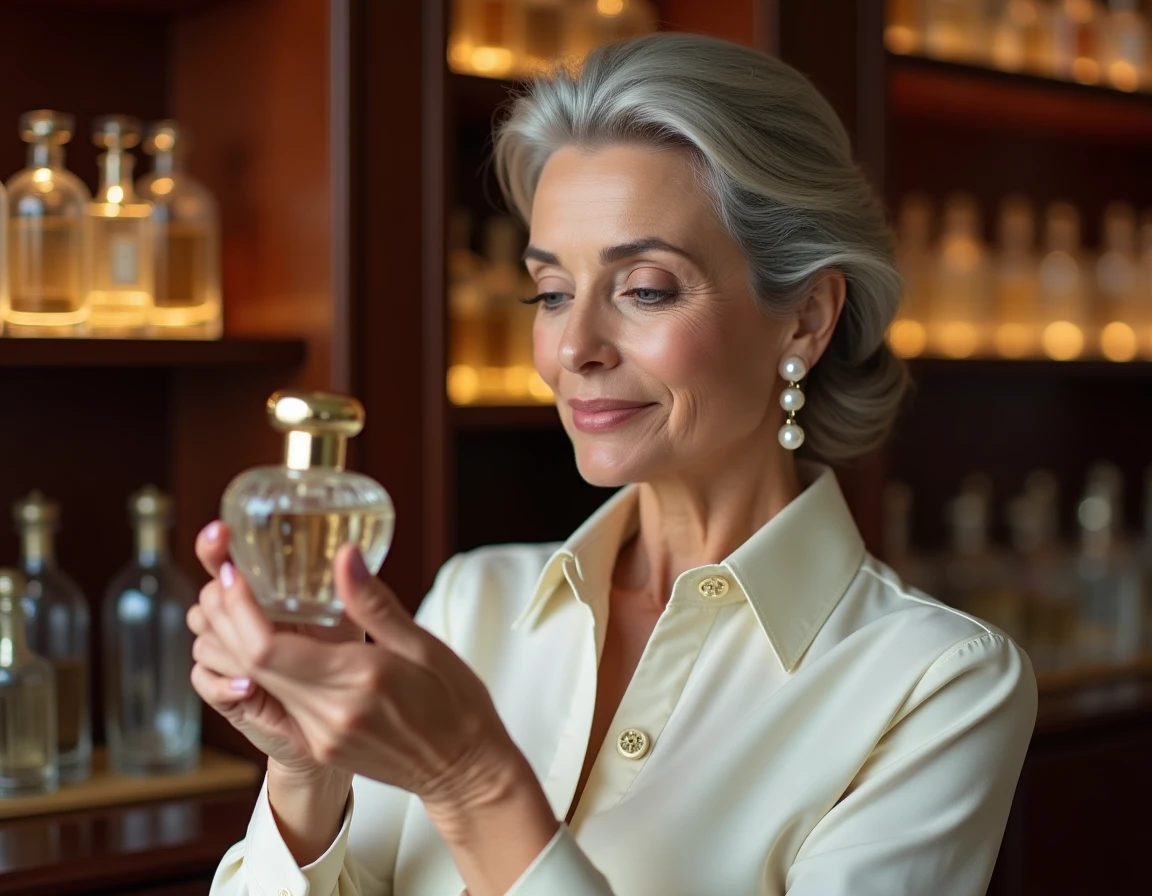
When you’ve been wearing the same perfume for years and no one notices it anymore, the first reaction is to spray more. After 70, this is often the worst idea. Olfactory perception decreases with age, skin holds onto molecules less effectively, and those around you may have their own respiratory sensitivities. Choosing an elegant perfume at this age requires recalibrating your habits rather than amplifying them.
Regulated allergens and perfume after 70: what changes concretely
Most age-specific perfume guides overlook a topic that significantly impacts concrete choices: the reformulation of fragrances due to regulatory constraints on allergens. For several years, certain molecules like lyral (hydroxyisohexyl 3-cyclohexene carboxaldehyde) have been gradually restricted or banned in compositions.
For someone over 70, this has two direct consequences. First, a perfume that has been faithful for decades may have changed its formula without any change to the bottle or name. If your favorite fragrance seems different, it’s not your nose that has changed; it may be the recipe.
Additionally, UFC-Que Choisir regularly updates its list of undesirable ingredients in eaux de toilette and perfumes. More and more senior consumers rely on these references to guide their purchases towards better-rated products, free from sensitizing substances or those suspected of endocrine disruption. These perfume tips for women over 70 are particularly useful for balancing elegance and safety criteria.
In practice, when choosing a fragrance after 70, reading the composition on the back of the box is not superfluous. It has become a health reflex as much as a taste one.
Mature skin and perfume longevity: adapting concentration and application areas
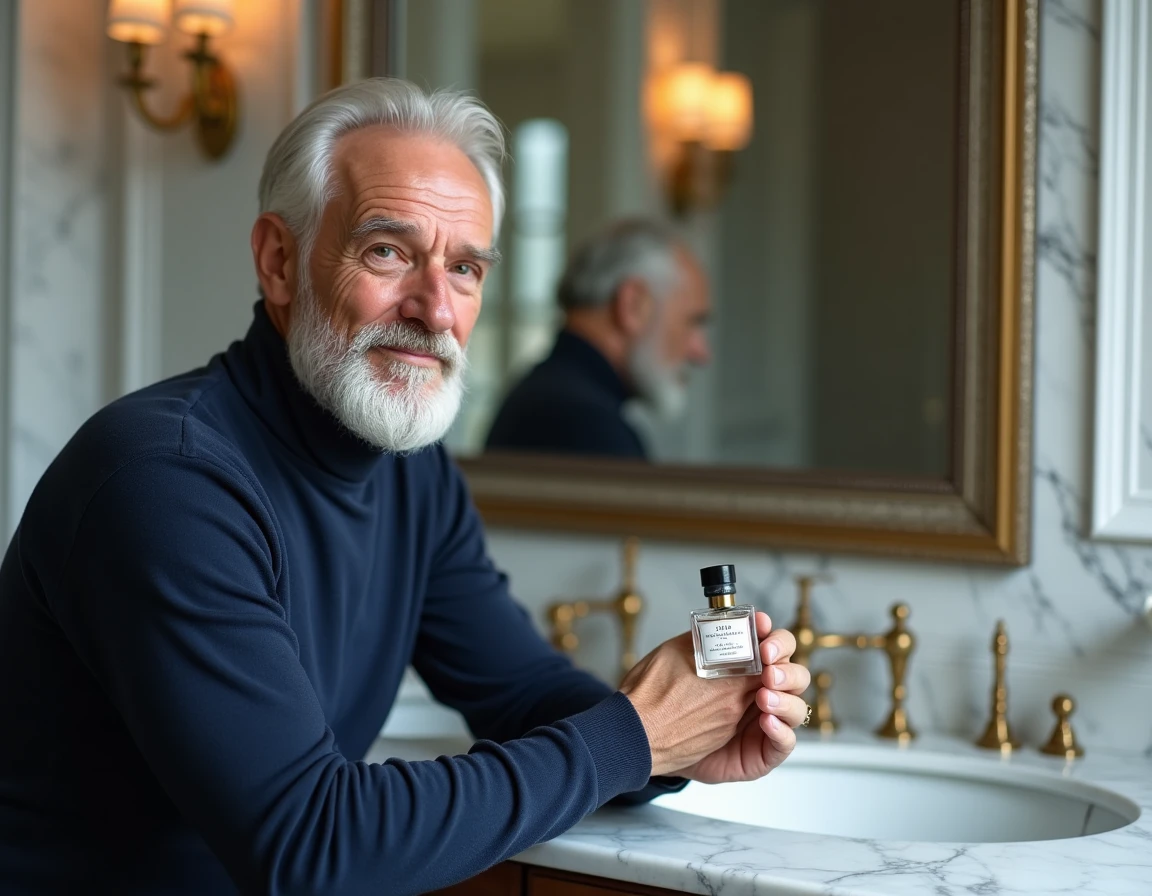
Skin after 70 is generally drier and less oily. Aromatic molecules evaporate more quickly, which explains why the same perfume seems to last less long than at 40.
Favoring an eau de parfum over an eau de toilette partially compensates for this loss of longevity. The higher concentration of essential oils allows the scent trail to last without needing to multiply the sprays.
The other lever, often overlooked, concerns the application areas. We instinctively spray on wrists and neck. After 70, it’s better to target:
- The inside of the elbows, where body heat gradually diffuses the perfume without a spike in intensity
- The upper chest, under clothing, for a discreet trail that accompanies movements
- The hair or a scarf, especially if the skin is very dry (the fabric retains base notes better than dehydrated skin)
Applying an unscented moisturizer before spraying also helps to fix the molecules. This simple gesture extends the longevity by at least one to two hours in most cases.
Perfume in communal living and respiratory conditions: olfactory politeness
This topic is rarely addressed, but it weighs heavily when living in a medicalized residence or when a partner suffers from asthma, COPD, or chemical sensitivity. A perfume that is too strong in a closed space can trigger real respiratory discomfort in vulnerable individuals.
In nursing homes, some facilities request limiting strong fragrances in common areas. This is not a whim: chronic respiratory conditions affect a significant portion of residents, and an intense scent in a narrow corridor or dining room quickly becomes a collective problem.
Maintaining an olfactory signature in this context is entirely possible, but it requires reconsidering the strength of the scent trail. A few concrete principles work well:
- Spray once, from a distance (one spray in the air, walk through the cloud)
- Choose fragrance families with low projection: light citrus, white musks, discreet powdery notes
- Avoid fragrances with a strong amber, patchouli, or oud component, as their scent trails persist for a long time and carry far
- Test the perfume in the room where you spend the most time, not just in the store: feedback varies on this point, as perception depends on the volume and ventilation of the space
Fragrance families suitable for an elegant signature after 70
The real question is not which perfume corresponds to which age. It’s about knowing which olfactory structures work with mature skin, a less sharp sense of smell, and a social life often quieter than at 50.
Woody base notes (cedar, sandalwood, vetiver) hold well on dry skin and remain discernible even when olfactory perception decreases. Powdery florals like iris or violet offer immediate elegance without the overwhelming aspect of heavy orientals.
Citrus notes (bergamot, neroli, petitgrain) are perfect for those who want a fresh, clean, and discreet scent, but one must accept that their longevity remains short. They can be combined with a musky base to extend the effect without increasing intensity.
Conversely, very sweet compositions (dominant vanilla, praline, caramel) or very animalistic (raw leather, castoreum) are often perceived as stifling by those around, even in small doses. The gap between what the person wearing the perfume perceives and what others smell widens with the decline of smell: we tend to apply more because we can no longer smell it ourselves.
The “surroundings test” method
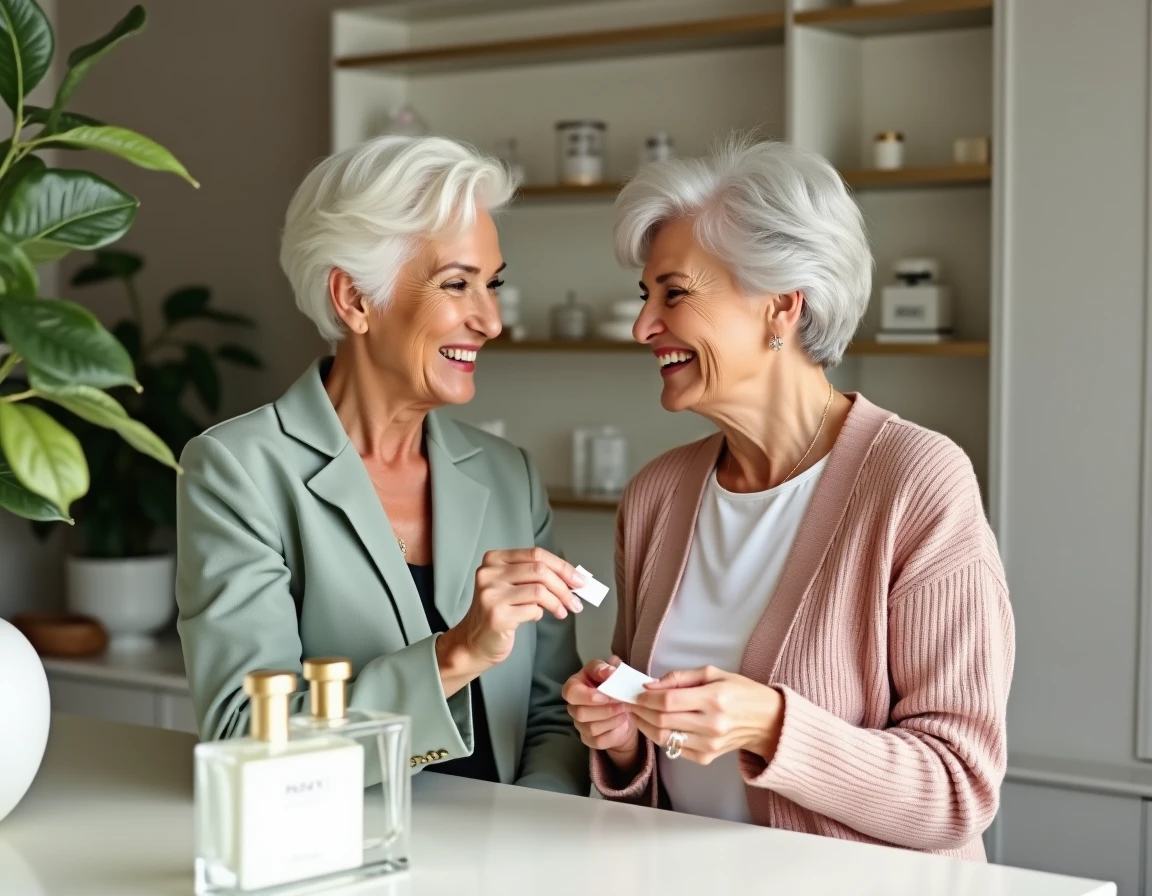
A useful reflex is to ask a close person to smell the perfume on you after two hours of wear, not immediately after spraying. It’s the residual trail that matters in daily life, not the initial burst. If the person can clearly perceive it from an arm’s length away, the dosage is good. If they can smell it from two meters away, it’s too much.
After 70, the ideal fragrance is one that those around you can detect up close, with pleasure, without ever being overwhelmed from a distance. It’s a technical as well as aesthetic balance, and it is adjusted by choosing the concentration, application area, and olfactory family, not by the price of the bottle.