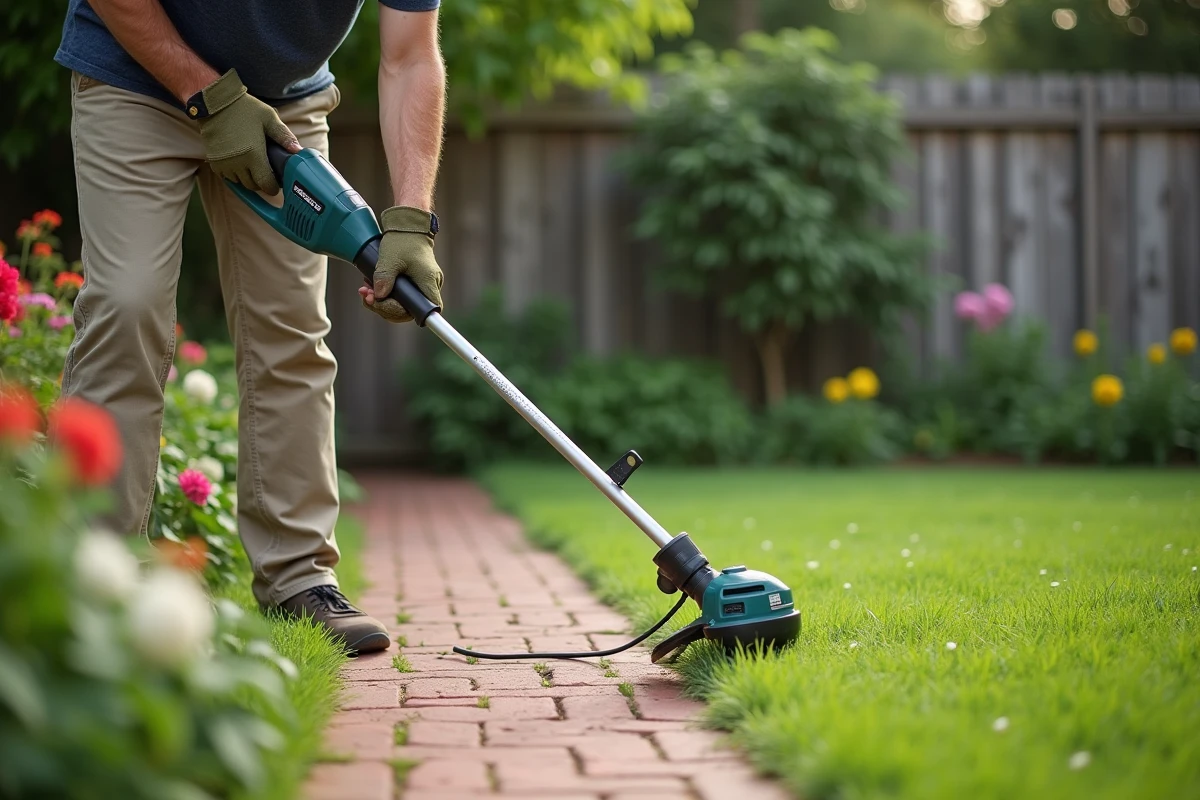
Choosing a string trimmer involves balancing three variables that are rarely considered together: the type of power, the cutting system, and the weight of the device in real-world usage conditions. Guides often compare these criteria separately, complicating the final decision. This article intersects these parameters to identify the most coherent configurations based on the size of the garden and the nature of the edges to be maintained.
Interchangeable battery ecosystem: the criterion that comparisons overlook
Most guides categorize string trimmers by type of power (corded, battery, gas) without addressing the purchasing logic that has changed in recent years. Manufacturers like Makita, DeWalt, or Bosch now offer battery ecosystems compatible with multiple garden tools. The string trimmer is no longer an isolated purchase: it fits into a range.
Specifically, if you already own a chainsaw or a battery blower from a given brand, the choice of string trimmer primarily depends on the battery you already have. Buying a bare tool (without battery or charger) significantly reduces the cost. This reasoning is absent from most online comparisons, which evaluate each tool as a standalone product.
To explore the different models of string trimmers available and compare their features, rotofil.fr allows filtering by power type and usage.
Comparison of electric, battery, and gas string trimmers
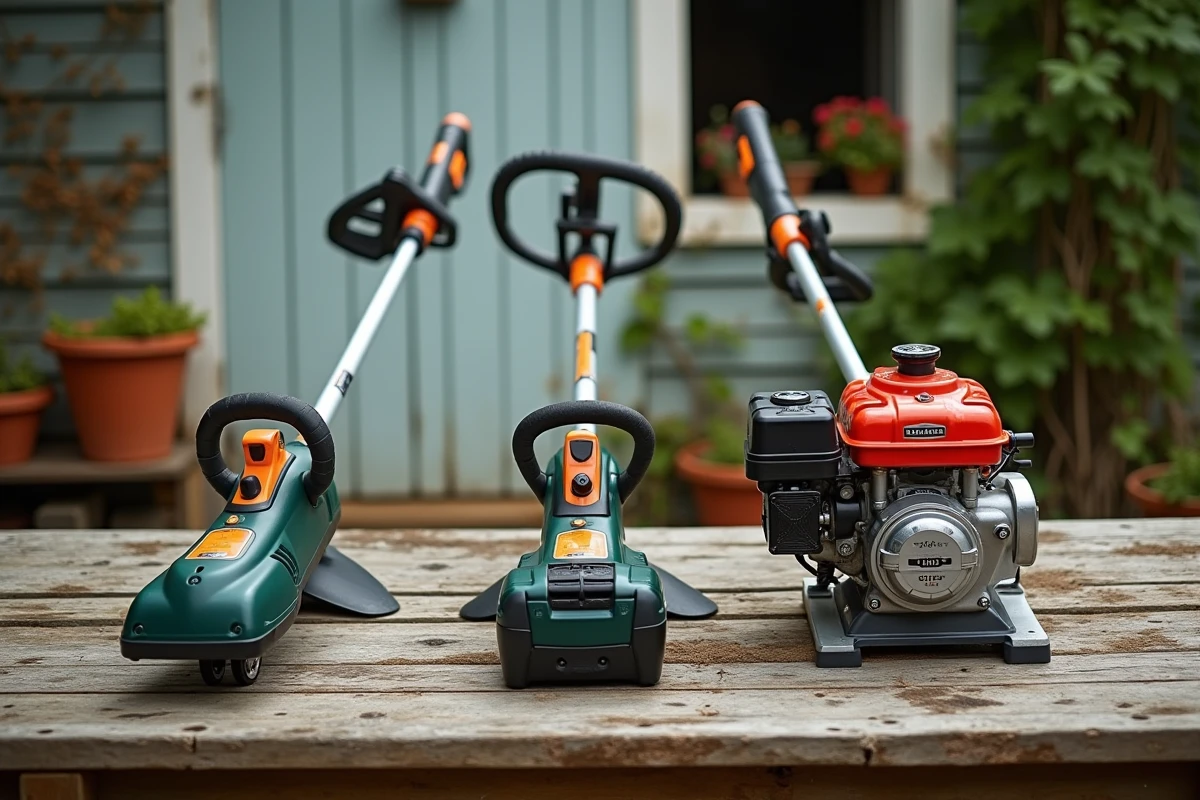
The table below summarizes the functional differences between the three families of string trimmers. The data corresponds to the most common configurations for domestic use.
| Criterion | Corded Electric | Battery | Gas |
|---|---|---|---|
| Average Weight | Light | Medium (battery included) | Heavier |
| Runtime | Unlimited (mains) | Variable, often less than manufacturer specs | Depends on the tank |
| Noise Level | Low | Low to moderate | High |
| Cutting Power | Sufficient for fine grasses | Sufficient to good depending on voltage | High, for dense grasses and brush |
| Noise Regulation Constraint | Low | Low | Subject to the thresholds of directive 2000/14/EC |
| Range | Limited by extension cord | Free | Free |

One point clearly stands out from this table: the battery model offers the best compromise between mobility and noise for residential gardens. The corded option remains relevant for very small areas where a socket is nearby. The gas model is justified on rugged terrain or edges overrun with thick vegetation.
Real battery runtime: a gap to anticipate
Field tests report a gap of 20 to 30% between the runtime advertised by the manufacturer and actual usage in dense edge conditions. In a modest-sized garden, this can make the difference between finishing the job on one charge or having to wait for a recharge. Opt for a battery whose capacity slightly exceeds your estimated need.
Nylon line, blades, or knives: which cutting system for which edge
The cutting system determines both the result and the type of vegetation you can handle. Two main families stand out.
- Nylon line: suitable for fine grasses and finishing along paths or at the base of trees. The diameter of the line determines its resistance against tougher grasses. A round line is suitable for regular maintenance, while a serrated or star-shaped line improves efficiency on tall grasses.
- Plastic blades or knives: more rigid than line, they cut through dense grasses without wearing out as quickly. However, they break sharply upon contact with a hard obstacle (stone, concrete edge), which limits their use to clear areas.
- Metal disc (brush cutter): reserved for powerful gas devices and overgrown terrain. It goes beyond the scope of a classic string trimmer, but some hybrid models accept this type of head.
The choice of cutting system directly depends on what you cut most often. For flowerbed edges and grass, nylon line remains the standard. For edges combining tall grasses and resilient weeds, plastic blades take over.
Weight and ergonomics of the string trimmer: what matters for prolonged use
A string trimmer is held at arm’s length for the entire duration of the work. The difference between a lightweight device and a heavier model is felt as early as the second flowerbed edge. Two elements deserve special attention.
The adjustable auxiliary handle allows you to adapt the grip to your height. On entry-level models, this handle is fixed, which imposes a restrictive posture for tall or short users. An adjustable handle and a carrying harness significantly reduce fatigue during sessions exceeding twenty minutes.
The adjustable cutting head (pivoting or tilting) facilitates vertical work along low walls and under low hedges. Not all models offer this feature. Check this point before purchasing if your garden has raised edges or sloping flowerbeds.
Noise in residential areas: a regulatory constraint to know
The European directive 2000/14/EC imposes noise level thresholds on powered gardening tools. Gas string trimmers are the most affected. In residential areas, municipal regulations also limit the time slots for use. An electric or battery model avoids these constraints in the vast majority of cases.
The choice of a string trimmer boils down to three concrete decisions: the power source (based on your existing battery inventory or the proximity of a socket), the cutting system (nylon line for finishing, blades for dense grasses), and ergonomics (adjustable handle, manageable weight). The gap in runtime between manufacturer specs and actual usage on battery models remains the most useful data to keep in mind before checking out.