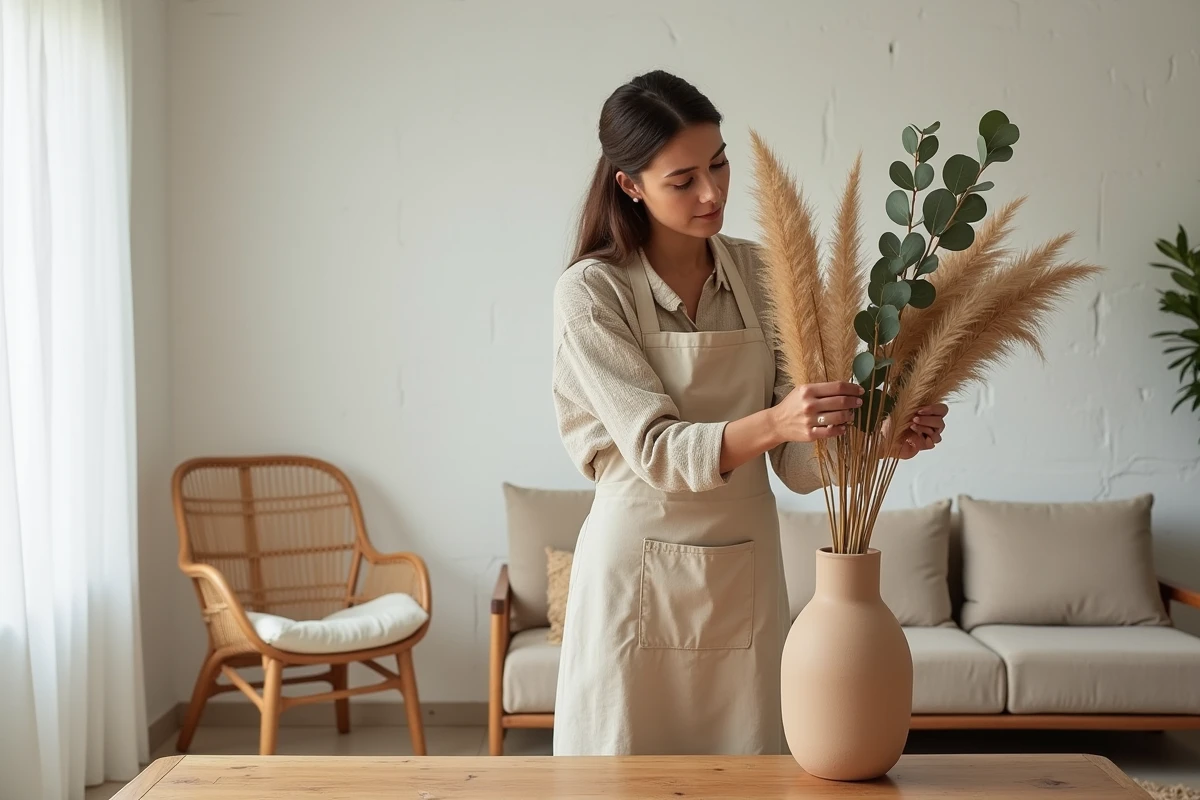
Transforming your interior is not just about choosing a new sofa or repainting a wall. The question that deserves to be asked is: which levers produce a visible change with the best effort/result ratio? Between the choice of materials, the management of light, and the integration of second-hand pieces, there are many parameters to compare. This article looks at three concrete axes of transformation to identify those that truly change the atmosphere of a room.
Natural light, textiles, and furniture: which lever transforms a space the most
Not all decor changes are equal. Some alter the perception of a space in just a few hours, while others require a significant investment for a subtle result. The table below compares three common levers according to their visual impact, relative cost, and ease of implementation.
| Lever | Visual Impact | Relative Cost | Implementation |
|---|---|---|---|
| Light optimization (curtains, mirrors, furniture positioning) | High | Low to moderate | Few hours |
| Textile renewal (cushions, throws, rugs) | Moderate to high | Moderate | Immediate |
| Main furniture change (sofa, table, bed) | High | High | Several days to weeks |
The conclusion is clear: light remains the lever with the best impact/cost ratio. Repositioning a mirror facing a window or replacing opaque curtains with sheer ones changes the perception of an entire living room without touching the furniture.
On the other hand, renewing textiles offers an immediate transformation. Changing a rug and three cushions in a living room takes less than an hour and is enough to shift from a cold ambiance to a cozy atmosphere. It is the most underestimated lever.
Among News Déco’s home tips, this prioritization logic can be found: act first on what is visible and felt, before making heavy investments in furniture.
Circular decoration and second-hand: a paradigm shift for interior design
Second-hand decoration is no longer a budget compromise. Several French brands (Selency, Leboncoin, Emmaüs, Ikea France with its buy-back service) have structured an offer that makes circular decoration a style approach in its own right. Ikea France publishes an annual barometer on the circular economy, showing a significant increase in the volumes of furniture taken back and resold since 2022.
What changes the game for interior design is the diversity of available pieces. A vintage 1960s sideboard found on Selency brings a uniqueness that no new catalog can replicate. Second-hand objects carry a patina, a history, and it is precisely this imperfection that creates character in a room.
What second-hand brings to the design of a living room
Mixing new and old pieces produces an effect that professional decorators call “mix and match.” A thrifted armchair next to a contemporary lamp creates a visual tension that adds depth to the space.
- Vintage solid wood furniture (sideboard, coffee table, shelf) brings warmth and a structure that particle board furniture does not replicate
- Handcrafted decorative objects (ceramics, antique mirrors, ornate frames) serve as focal points that draw the eye and rhythm the room
- Reclaimed textiles (Berber rugs, thrifted wool throws) add textures that standardized collections rarely offer
The combination of different eras and styles strengthens cohesion rather than weakens it, provided that a common thread is maintained: a color palette limited to three or four shades, for example.
Colors and layout: the measurable effect on domestic well-being
The choice of colors goes beyond aesthetic considerations. Research in environmental psychology documents a link between space organization, natural light, and the mental load of occupants. INSERM and WHO Europe have relayed several summaries indicating that the perception of control over one’s domestic environment reduces perceived stress.
In practical terms, being able to reorganize, modulate, and tidy up one’s space contributes to greater life satisfaction. This is not a marketing argument: it is a finding from studies published in journals like the Journal of Environmental Psychology.
Restricted palette or chromatic boldness: two approaches that work
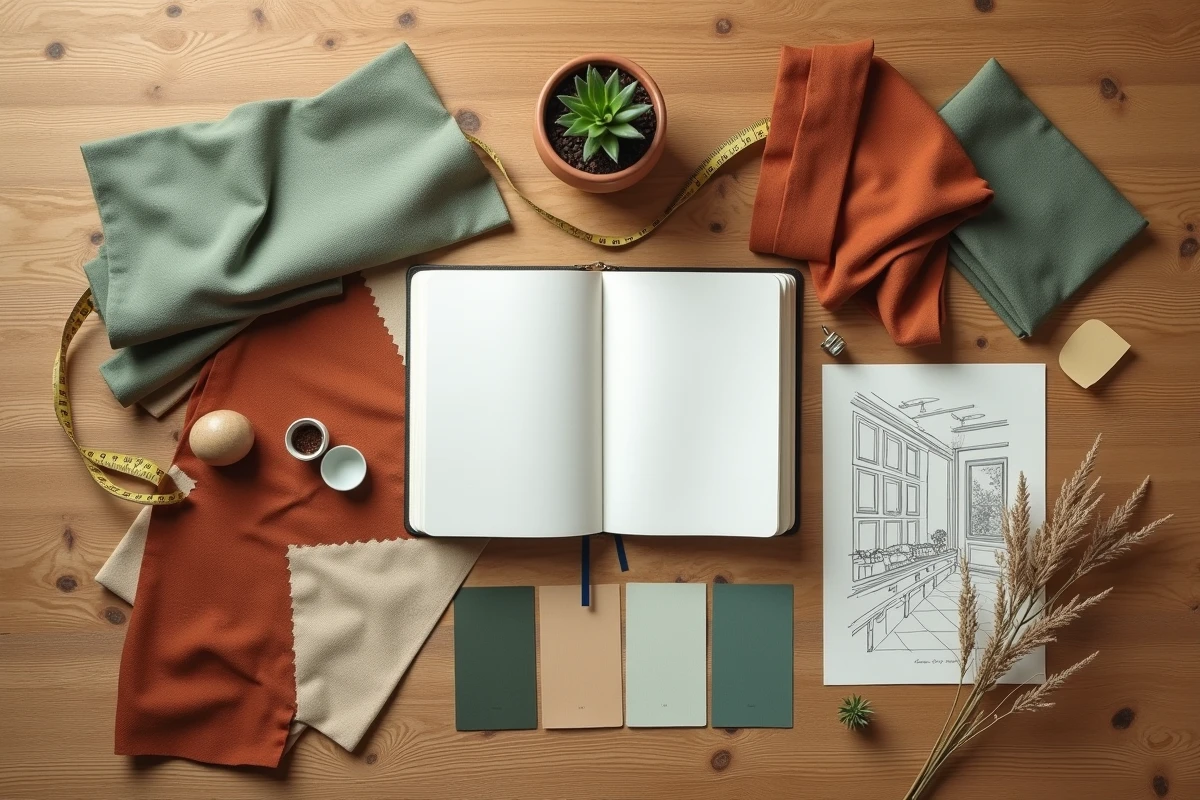
Neutral shades (off-white, beige, light gray) visually enlarge a room and facilitate changes in accessories throughout the seasons. Conversely, an accent wall in a saturated color (terracotta, duck blue, sage green) anchors the identity of a space and gives it an immediate focal point.
Just one wall painted in a strong color is enough to transform the atmosphere of a room. Painting all four walls often produces the opposite effect: the room closes in, light diminishes, and visual fatigue sets in.
The connection with the furniture also matters. A terracotta wall works with light wood and natural linen. A duck blue wall pairs well with brass elements and cream textiles. The coherence between wall color and materials present in the room determines whether the result appears intentional or accidental.
DIY and repurposed objects: personalize without uniformity
DIY decor has gained credibility thanks to the quality of available tutorials and the accessibility of materials. Transforming an old ladder into a towel rack, customizing an Ikea piece with leather handles, or creating an asymmetrical gallery wall is now a project achievable in a weekend.
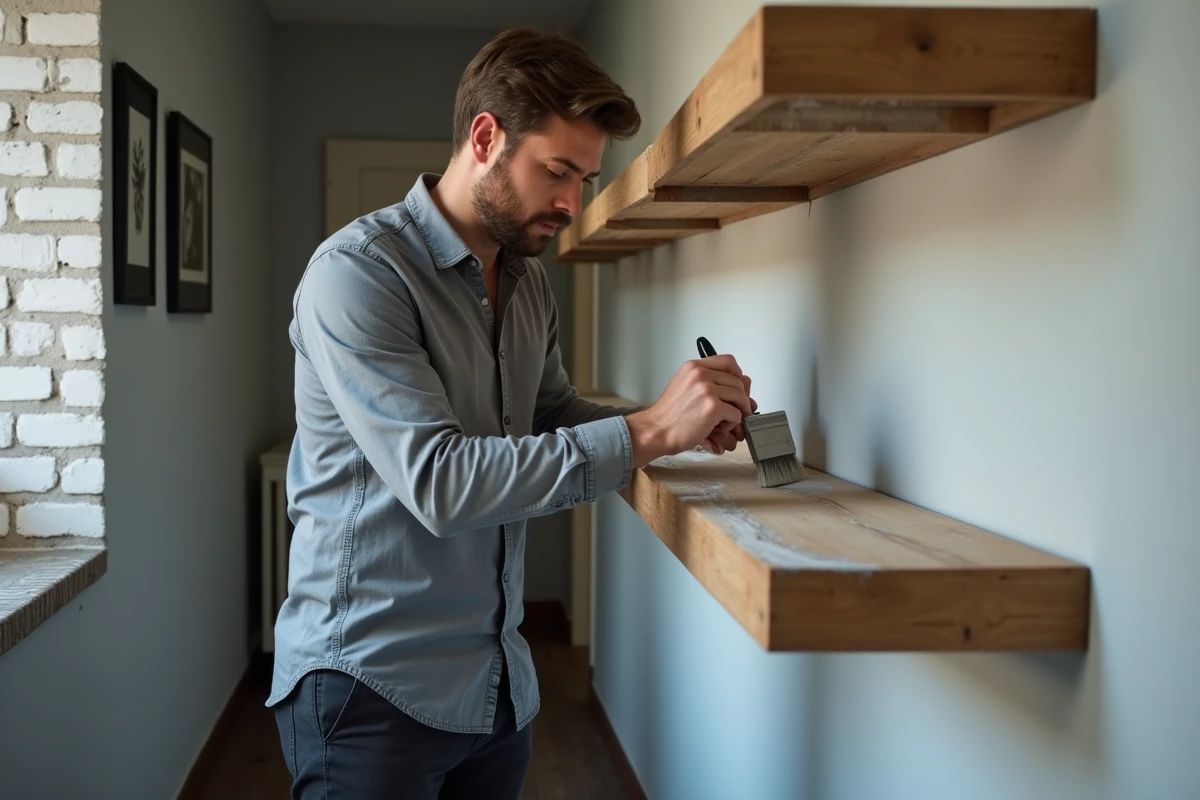
The limit of DIY lies in repetition. The same projects circulate on social media, and the risk is to reproduce an interior seen a thousand times. The challenge is to repurpose an object for a use that no one has anticipated: a wooden wine crate turned into a wall shelf, an old window frame converted into a decorative mirror.
- Favor raw materials (untreated wood, patinated metal, ecru linen) that age well and retain their character over time
- Limit DIY projects to two or three per room to avoid a cluttered effect or visual overload
- Test the positioning of an object in several places before fixing it, as lighting and angles change everything
A successful interior is not one that follows a trend to the millimeter. It is one where each element, whether new, thrifted, or handmade, occupies its place for a specific reason. The next time you consider a change, start with light and textiles before thinking about furniture: the result will be visible faster and at a much lower cost.