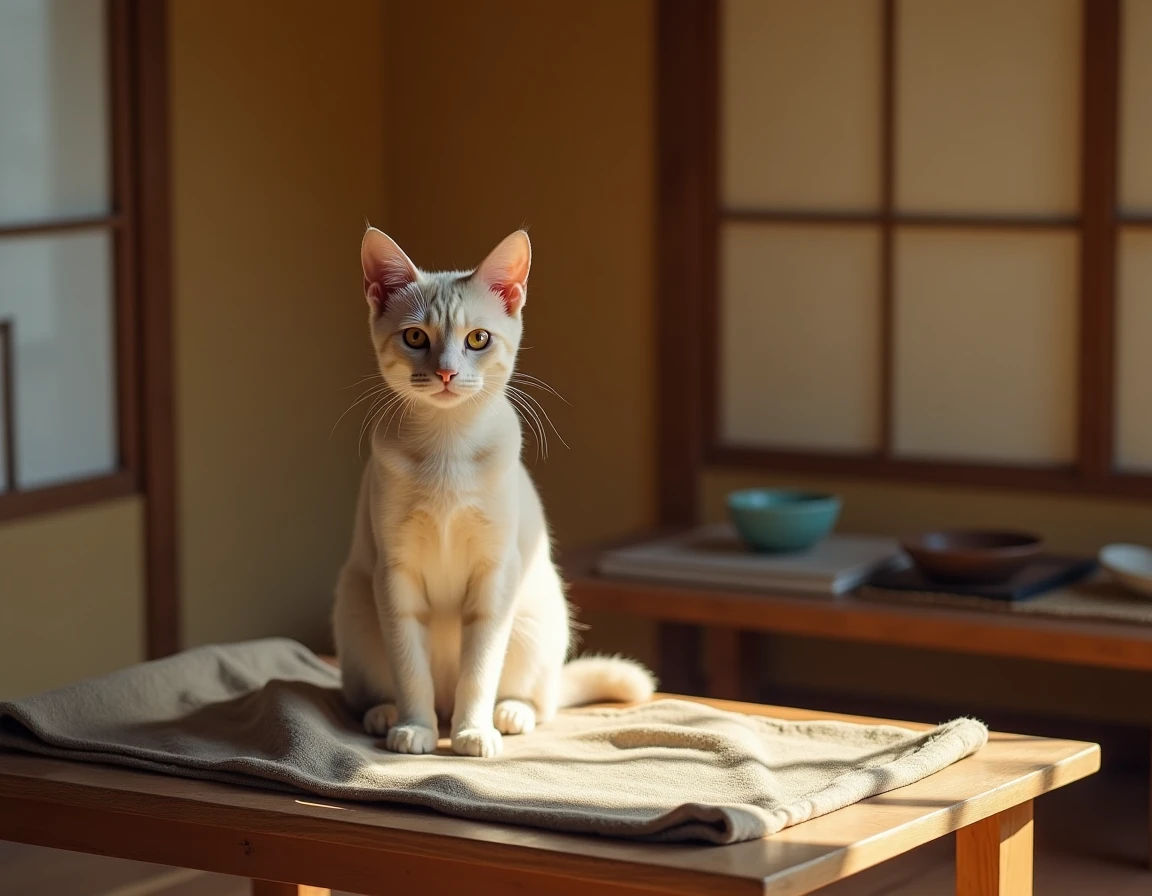
The light beige cat does not have a universal meaning. Depending on cultural areas, eras, and belief systems, a light coat can evoke prosperity, purity, or have no particular symbolic value. Interpretations vary, and the available data do not allow for a straight line to be drawn between a coat color and a fixed meaning.
What makes the subject interesting is less the symbolism itself than the mechanisms that produce it: why do certain cultures project moral or spiritual qualities onto an animal based on its coat?
Feline coat colors: what genetics says (and does not say)
In official feline nomenclature, what is commonly referred to as “light beige” corresponds to two dilutions recognized by FIFe (Fédération Internationale Féline): cream (dilution of red) and fawn (dilution of chocolate). These shades result from the combination of dilution genes passed on by both parents.
Several popular breeds (British Shorthair, Scottish Fold, Ragdoll) have seen an increase in registrations of very light-coated individuals since the mid-2010s, according to FIFe records. This phenomenon reflects a growing demand, partly driven by the aesthetics of social media.
The key point to remember: there is no robust scientific correlation between coat color and cat personality. Feline behaviorists remind us that character depends on behavioral genetics, socialization, and environment. Exploring the meaning of the light beige cat thus falls within the cultural and symbolic realm, not ethology.
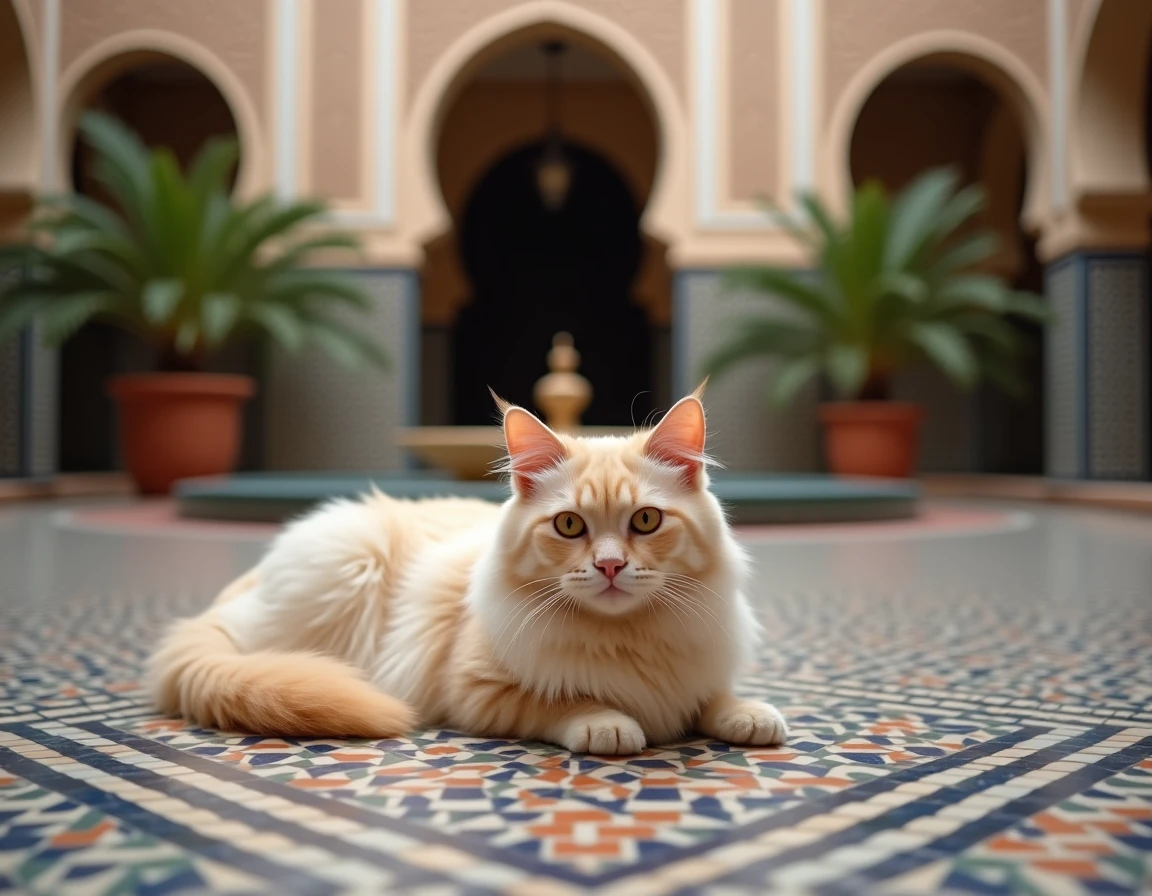
Light beige cat in ancient Egypt and the Mediterranean basin
Ancient Egypt granted cats a sacred status, linked to the worship of the goddess Bastet. Representations show felines with varied coats, but light shades (pale ochre, sand) dominate in frescoes and funerary statuettes. The reason is likely practical: the available pigments and the actual color of wild North African cats, which are naturally close to sandy beige.
Attributing a specific symbolism to “beige” in this context would be anachronistic. The Egyptians did not classify cats by coat color as modern feline enthusiasts do. The sacred pertained to the entire species, not a coat shade.
In ancient Greece and Rome, the cat held a more utilitarian role (rodent hunting). Texts rarely mention color. Mediterranean feline symbolism does not distinguish light coats from dark coats before the European Middle Ages, a period when the black cat begins to concentrate negative projections.
Meaning of the light cat in Asia: Japan, China, and beyond
Japan offers a precise case study with the maneki-neko, the famous lucky cat. Its colors have codified meanings:
- White (close to very light beige) symbolizes purity and happiness
- Gold attracts financial prosperity
- Black protects against evil spirits
- Red wards off diseases
A maneki-neko in cream or ivory hue remains associated with positive energy linked to domestic serenity. This codification is as much commercial as it is spiritual: manufacturers adapt colors to local demand.
In China, the cat does not hold the same symbolic place as the dragon or the crane. However, popular beliefs associate light-coated cats with luck, especially if they appear spontaneously near a business. Field reports vary on this point depending on regions and generations.
The case of the cream cat in feng shui
Some contemporary interpretations of feng shui incorporate the presence of a light cat in the domestic space as a calming element, linked to earth energy. These readings remain marginal in traditional feng shui and are more aligned with Westernized New Age currents.
Adoption bias and modern symbolic projection
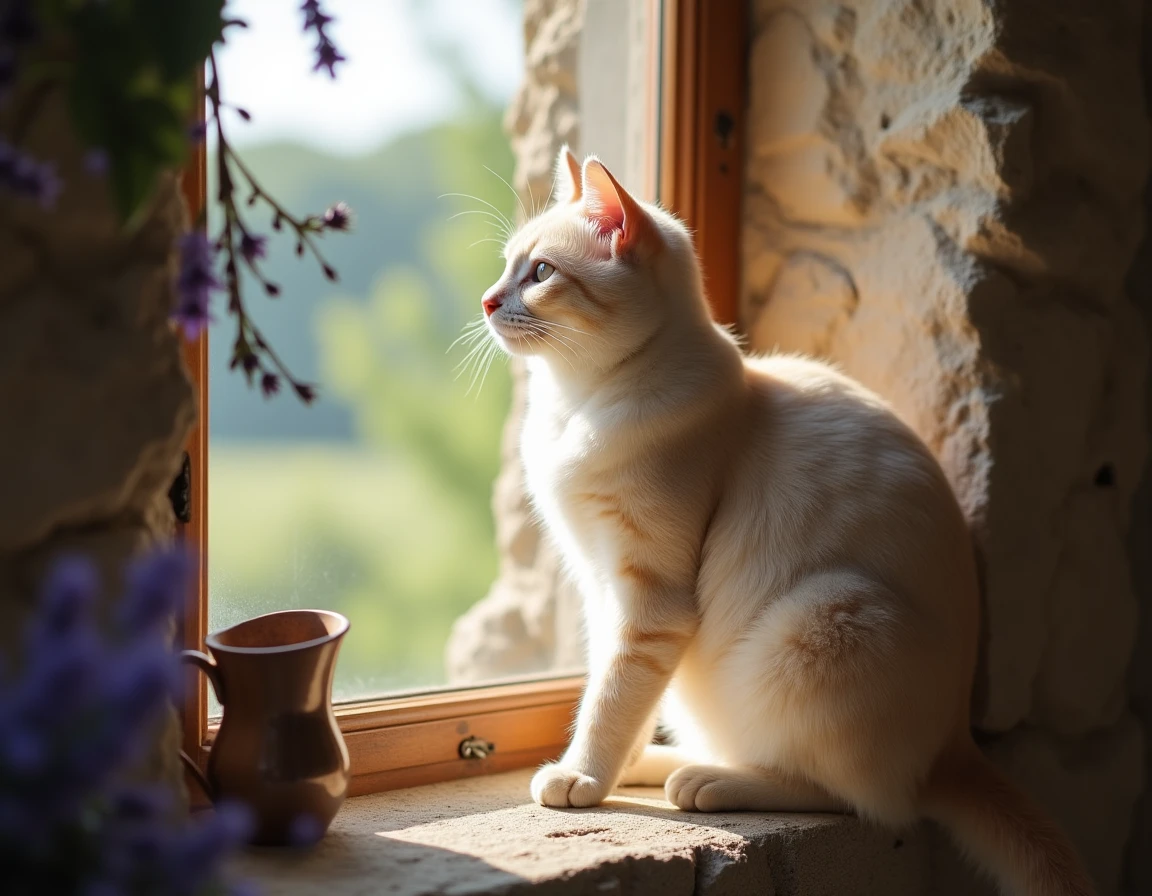
Animal protection associations report a measurable phenomenon: cats with light or neutral coats (beige, cream, sand) are adopted more quickly than black or classic tabby cats in certain urban shelters. This aesthetic bias has concrete consequences on shelter stay durations.
Since the 2020s, European breeders and feline associations have observed a rise in popularity of cream and fawn coats, driven by a minimalist aesthetic that is very present on visual platforms. The light beige cat has become an element of interior decoration as much as a life companion.
This trend generates a new form of symbolism, disconnected from ancient traditions:
- Light beige evokes softness, calm, “cocooning”
- It visually integrates into Scandinavian or Japanese-inspired interiors
- Its “neutral” appearance facilitates the emotional projection of the owner
The contemporary symbolism of the light beige cat is thus constructed less by cultural heritage than by market dynamics and digital visual codes. Ancient meanings (purity, luck, serenity) persist, but they are reformatted by recommendation algorithms and decor trends.
Popular beliefs and limits of interpretation
Several European popular traditions associate a light cat entering a house with a sign of future prosperity. In Russia, giving a light-coated cat as a housewarming gift remains a documented practice in some rural areas.
These beliefs do not constitute a unified corpus. They vary from village to village, from one generation to the next. No major tradition reserves a distinct symbolic status for the light beige cat compared to the white cat or the light red cat. The boundary between “beige,” “cream,” “sand,” and “off-white” does not exist in ancient symbolic systems, which reason in broader categories (light/dark, solid/spotty).
The light beige cat as we define it today is a product of modern feline classification. Attributing to it a millennia-old cultural meaning requires caution: contemporary categories are often projected onto systems of thought that did not contain them.