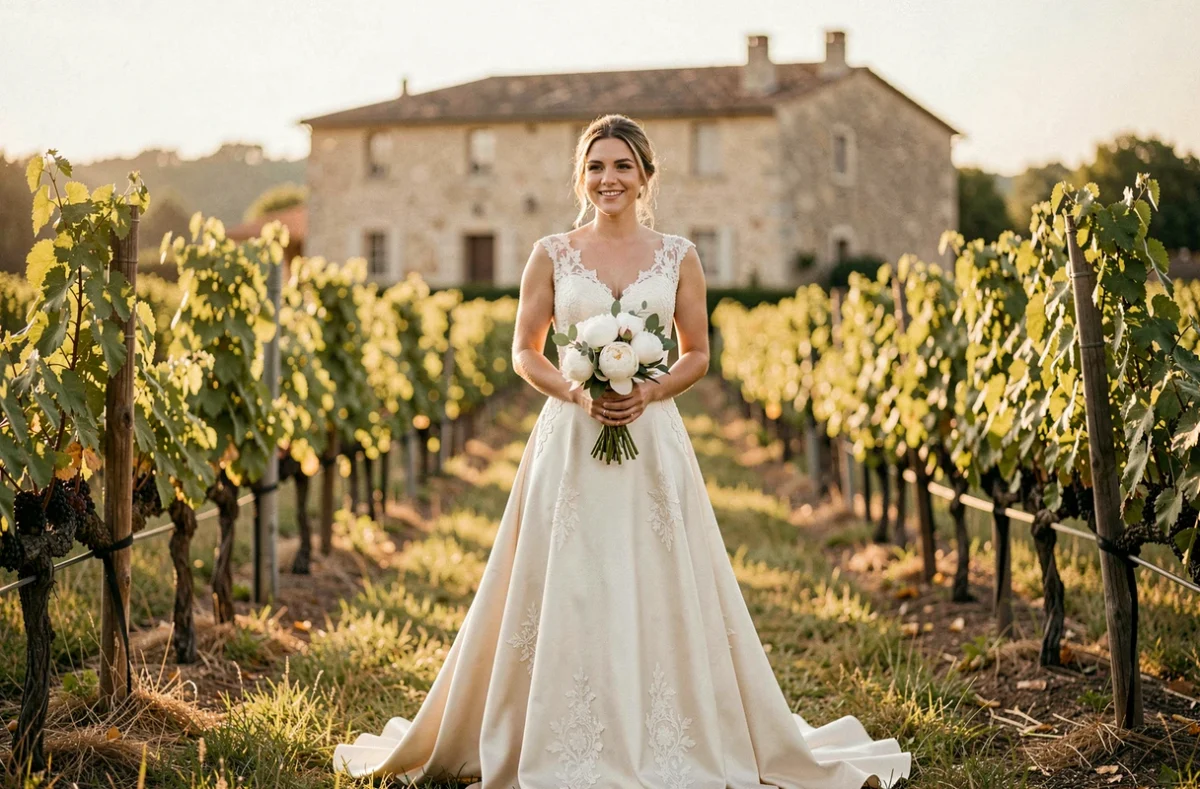
In France, autumn is increasingly becoming a popular season for weddings, with demand on the rise according to several industry professionals.
Planning a memorable wedding means working around real-world constraints: a fluctuating budget, regulations on event waste, and choosing vendors in a market saturated with online offers. This article lays the groundwork for a clear-eyed approach, far from generic lists of tips.
Autumn weddings: the challenges and advantages of a season on the rise
The low light at the end of the day, warm color palettes and mild temperatures make autumn a sought-after setting. But choosing this season involves trade-offs that wedding magazines rarely discuss.
Weather remains the biggest unknown. An outdoor wedding between September and November requires a covered backup plan large enough to accommodate all the guests. Renting a tent or marquee is a significant budget item in its own right, often underestimated when booking the venue.
Vendor availability is another advantage of this time of year. Photographers, caterers and florists generally have fewer bookings than in June or July, which can mean more flexible rates or faster responses. On the Mon Plus Beau Mariage website, couples can find vendors listed by specialty and region, making it easier to compare options before committing.
An autumn wedding also changes the floral decor. Seasonal flowers (dahlias, chrysanthemums, berries) cost less than out-of-season imported peonies. This is a practical way to cut the decor budget without compromising on style.
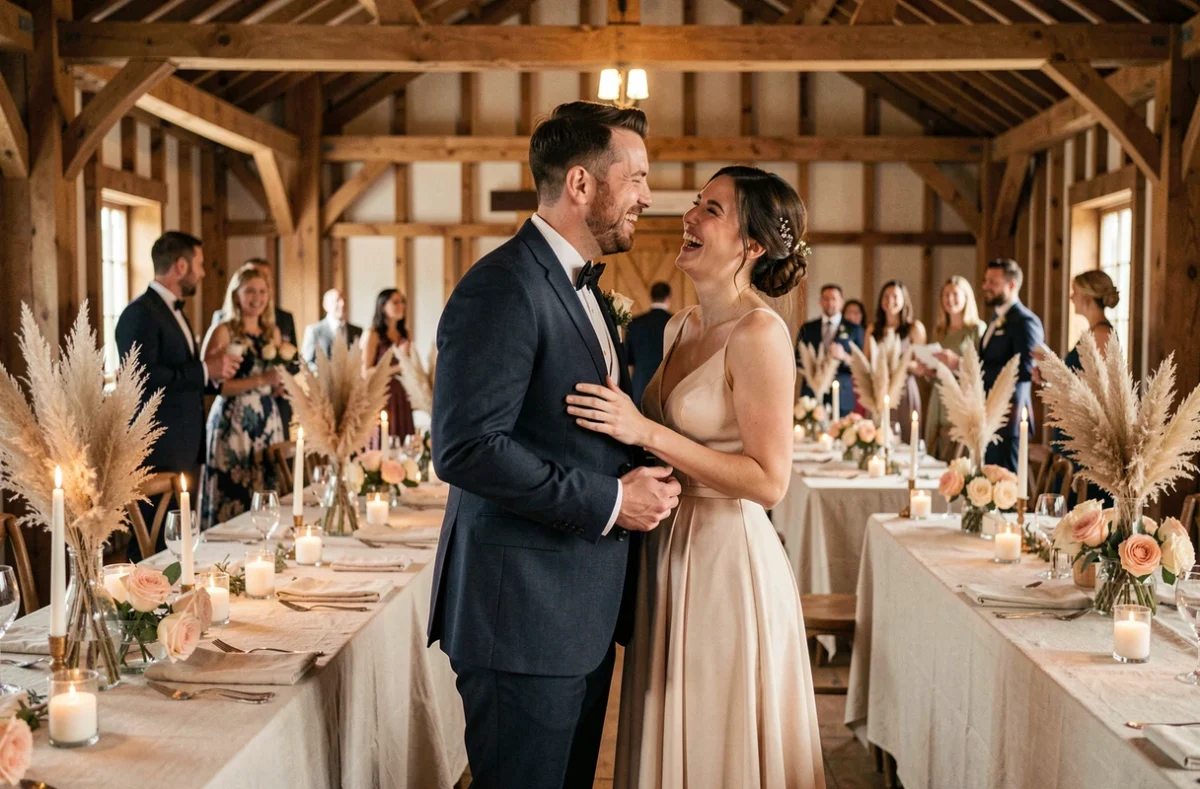
Tight wedding budget: make trade-offs rather than cutting back everywhere
The planned budget almost never matches the final bill. Overspending tends to happen on items couples hadn’t anticipated: venue administration fees, an extra charge for an additional hour of the reception, or ceremony wine billed separately from the catering package.
Instead of trying to save on every line item, a more effective approach is to identify three priorities and focus your spending on them. For some couples, that might be photography and the venue. For others, the meal and live music.
Where you can cut costs without a noticeable impact
- Printed stationery, which can be replaced with a wedding website with built-in RSVP for a few dozen euros a year instead of several hundred euros in printing costs
- Guest favors, which many guests leave behind on the table, can be replaced with a collective gesture (a donation to a charity, planting a tree)
- Large table flower arrangements, which can be replaced with candles, seasonal fruit or vintage finds
Two things you shouldn’t compromise on: the photographer, because the photos are the only tangible keepsake in the long term, and the caterer, because a disappointing meal stays with guests for a long time.
Event regulations: how the AGEC law affects weddings
Since the AGEC law began to come into force, events serving food have been subject to requirements for waste sorting and reduction. For weddings, this means practical obligations that the venue and caterer must meet.
Disposable tableware is prohibited for meals eaten on site. If the caterer offers paper plates for the cocktail reception, check that this complies with the rules in force. Biowaste (food scraps) must be sorted at source.
In practice, few couples deal with this directly. But asking the caterer and venue manager about it can help avoid extra cleaning or sorting fees after the reception. Asking vendors to spell out their waste management obligations before signing is still an uncommon habit.
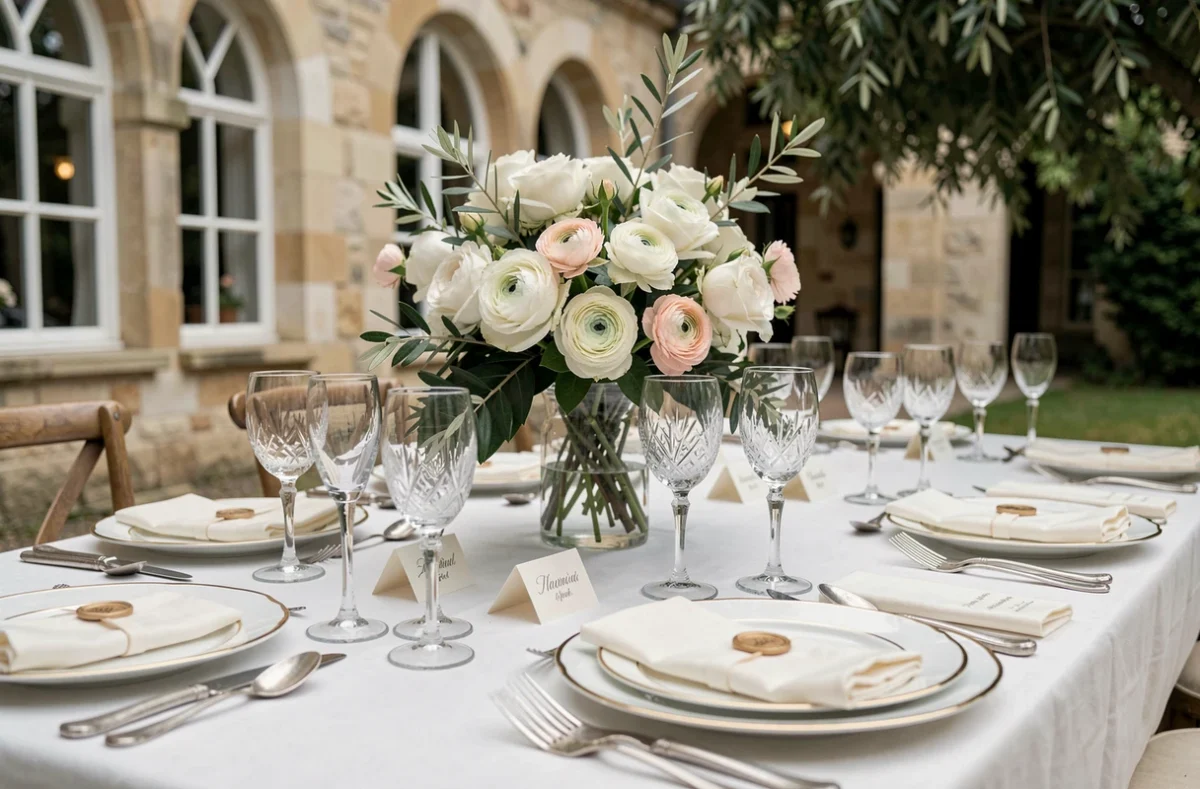
Finding reliable wedding vendors: look beyond online reviews
Most couples search for vendors online, using specialist platforms, social media and word of mouth.
Online reviews raise reliability concerns that couples often underestimate. A vendor with nothing but perfect ratings deserves just as much scrutiny as one with poor ratings. Fake reviews exist on both sides.
Practical checks to make before signing
- Ask for at least two references from recent weddings and the option to contact the couples directly
- Request an itemized quote, not a single package price with no breakdown
- Check that the vendor has professional liability insurance, which is mandatory but not always held by newly established sole traders
- Review the cancellation and postponement terms, an issue that has become central since the wave of Covid-related postponements
Word of mouth remains the most reliable way to vet local vendors. A DJ recommended by three couples in the same region inspires more confidence than an Instagram profile with ten thousand followers and no clear local presence.
Ceremony and reception: create an atmosphere without piling on the entertainment
The temptation to cram in entertainment (a photo booth, magician, fireworks, cocktail bar, jazz band and then a DJ) often has the opposite effect to the one intended. Guests move from one activity to the next without enjoying any of them, while the couple struggles to keep up with the schedule.
Two or three well-chosen highlights make a stronger impression than a string of ten activities. A personalized non-religious ceremony with readings by loved ones, a seated meal where the best man’s speech makes the whole room laugh, a first dance you’ve rehearsed: these moments are enough to create a day people will still talk about years later.
Decor follows the same principle. A venue with character (a farmhouse, a tree-lined garden, a vaulted hall) needs few additions. Overdecorating an already beautiful space buries its identity under garlands and interchangeable floral arches.
Planning a memorable day isn’t about piling things on; it’s about creating harmony between the venue, the pace of the day and the couple’s considered choices. A simple autumn wedding with a good meal, a skilled photographer and loved ones gathered in a fitting setting leaves a more lasting impression than a spectacular production where no one had time to sit down.