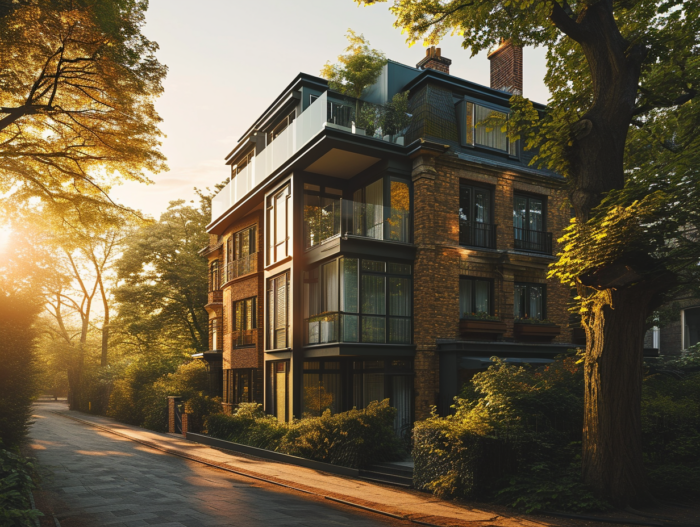
When it comes to investing in real estate, buyers are often torn between the charm of the old and the comfort of the new. These two markets offer distinct advantages and cater to very different criteria. New constructions attract with their modernity, energy performance, and the tax benefits that are often associated with them, such as the reduction of property tax or the Pinel scheme. In contrast, old real estate appeals with its character, history, and often central location, but it can involve significant renovation costs and poorer insulation. The choice between these two types of properties then depends on multiple factors, ranging from personal aspirations to financial and practical considerations.
Detailed comparison: new versus old real estate
In the maze of real estate decisions, choosing between a new home and an old one requires a precise analysis of the various parameters that distinguish them. According to ‘Mon Hebdo Immo’, new real estate programs, whether apartments or houses, offer notable advantages under the Sale in Future State of Completion (VEFA), such as comfort and security, a substantial savings on bills due to energy performance, and a superior location quality. These properties require land purchase and are associated with delivery times that can stretch the wait. Prices, moreover, are generally higher, reflecting the premium of newness and current construction standards.
On the other hand, old real estate presents itself as an alternative with a more attractive price, and often, a significant capital gain upon resale after a successful renovation. Buyers must prepare for potentially heavy renovation work, as well as sometimes substantial condominium fees. Depreciation of value is also a risk not to be overlooked, especially if the property is located in a less desirable area or if the necessary work turns out to be more extensive than expected.
Compliance with energy standards is an issue that concerns both new and old properties, with a common goal: energy performance. Investing in a new home guarantees compliance with the latest standards in force, such as RT 2012 or BBC, thus allowing for energy savings. Old properties, on the other hand, may require significant upgrades to achieve similar performance.
Tax incentives support decision-makers in their choices. For new properties, incentives such as property tax exemption, tax reductions, and schemes like the Pinel law or the new Pinel + law are significant levers. In the old sector, the Denormandie law promises tax benefits, but they remain less diversified and conditioned by location and the extent of renovation work. These elements, coupled with guarantees like damage insurance, the ten-year guarantee, and the two-year guarantee for new properties, must be carefully weighed to make an informed decision.

Key factors for choosing between new and old according to your real estate project
For the future owner scrutinizing the real estate market, the question is not limited to an aesthetic preference between new and old. It is about aligning the choice of housing with the objectives of the real estate project. Investing in the new ensures advantages in terms of comfort and security as well as a quality location that is often optimized. The guarantees provided by the VEFA, such as damage insurance and the ten-year and two-year guarantees, offer considerable peace of mind. Tax incentives, including property tax exemption and tax reductions, can also influence the direction towards new, especially for a primary residence or a tax-exempt rental investment.
Conversely, acquiring an old property comes with a more attractive price and the potential for capital gain upon resale, particularly after relevant renovations. The constraints to consider remain the potentially significant renovation work, as well as the risk of depreciation, especially if the property is located in a less desirable neighborhood. However, tax incentives such as the Denormandie law can help mitigate renovation costs, provided certain criteria are met.
Acquisition aids can play a decisive role. The zero-interest loan (PTZ), a scheme promoting home ownership in new properties, can tilt the balance towards new construction. Local government aids, as well as tax exemption schemes, enhance the attractiveness of this option. For those leaning towards the old, the zero-interest loan for renovations and energy renovation aids serve as levers to lighten the cost of compliance upgrades.
The ecological dimension also seeps into the decision-making process. Compliance with energy standards is an essential parameter for both types of properties, with a focus on energy performance that translates into long-term energy savings. New homes, by default, comply with recent standards such as RT 2012 or the BBC label, while old properties may require significant energy improvement work, although supported by specific aids.