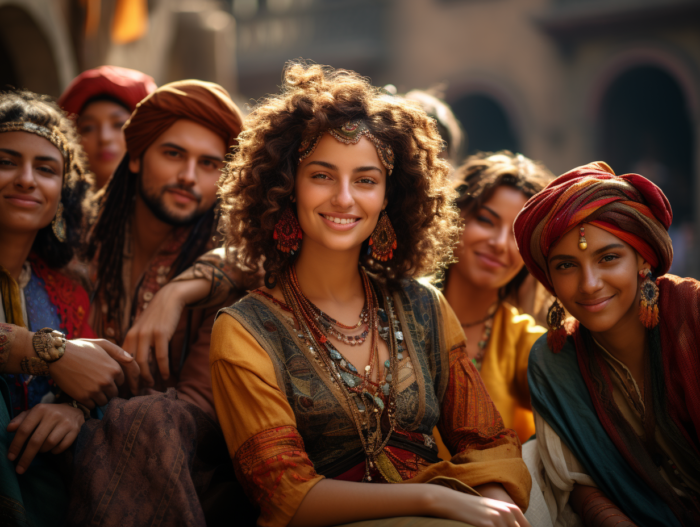
Fashion transcends the simple notion of clothing and accessories. It asserts itself as a universal language, a form of art that reflects the cultural, social, and political identity of each era. Through fabrics, cuts, and patterns, it communicates messages, ideals, and movements. Designers are storytellers who use fashion to tell stories, influence behaviors, and shape the collective imagination. Fashion trends are therefore a mirror of societal evolutions; they crystallize the aspirations of a community, a generation, or an era, reflecting the eternal dialogue between tradition and innovation.
Fashion as a Reflection of Cultural Identities
Retbutiko, a term now familiar to fashion enthusiasts, embodies this trend where traditional clothing and cultural expressions transform into vectors of identity. Fashion, in its relentless quest for originality and distinction, draws from the cultural heritage of societies to shape unique pieces. Native American headdresses, dreadlocks, and Sikh turbans become style elements that tell a story, that of a people, a struggle, or a philosophy.
Thus, fashion culture is inspired by cultural diversity and identities to create bridges between worlds. The fashion industry, sometimes accused of cultural appropriation, has a duty to respect the origins and meanings of the elements it borrows. Traditional garments are more than mere adornments; they are symbols, emblems of belonging and resistance. Fashion, in its essence, must be a tribute, a celebration of indigenous peoples and their history.
Streetwear, an expression of urban culture influenced by various subcultures, illustrates this permeability between fashion and cultural identity. Brands like Adidas, Nike, and Supreme, elevated to icons, constantly draw inspiration from and redefine this style. These garments, once marginal, are now at the heart of a thriving industry that engages with youth and its codes.
The result is a fashion rich in meaning, which, through a simple garment, tells the story of those who wear it. Designers, in search of authenticity, must juggle cultural legacies and contemporary aspirations. They become the guardians of a heritage while being the artisans of respectful innovation. Fashion, as a mirror of societies, reflects the complexity, issues, and beauty of our plural identities.

The Challenges of Authenticity and Innovation in Fashion Creation
The fashion industry, in perpetual evolution, must navigate between the reefs of cultural appropriation and the favorable winds of innovation. Creating without appropriating, innovating without distorting, such is the challenge that contemporary creators must face. Houses like Gucci, Victoria’s Secret, and designers like Marc Jacobs have faced accusations of cultural appropriation, highlighting the fine line between inspiration and exploitation.
In light of these issues, intellectual property becomes a battleground where the rights of minority cultures are often eclipsed by the power of large brands. The impact of globalization on fashion has exacerbated this problem, widely disseminating decontextualized cultural elements. Fashion is thus criticized for its use of cultural elements without permission, reflecting historically rooted relationships of domination and oppression.
Brands like N’go illustrate a respectful approach, where cultural appreciation takes precedence over appropriation. These initiatives highlight collaborations with the communities of origin, ensuring fair compensation and equitable exchange. Fashion trends must respect the essence of the cultures they celebrate, promoting an inclusive and ethical approach.
Ultimately, contemporary fashion creation is part of a complex dialogue between tradition and modernity, authenticity and adaptation. Fashion, in its quest for renewal, must be aware of its global impact, reinventing itself in a way that honors cultural identities without diluting them. Designers, as artisans of this renewal, bear the responsibility of weaving respectful links between the past and the future of fashion expressions.